
Published on: 15 Jan 2026
Multi Head Embroidery Machine Maintenance Checklist for Garment Factories
Key takeaways for garment factories:
- Regular maintenance is not an option, but a necessity to prevent costly downtime and ensure optimal performance of multi-head embroidery machines.
- Proper machine care directly leads to optimized stitch quality, increased production speed, and extended machine lifespan, safeguarding your capital investment.
- Consistent, high-quality output from well-maintained machines significantly impacts profitability and enables greater value addition in your products.
- Choosing a reliable partner like DukeJia, represented by HCA, for machines and comprehensive after-sales support is crucial for sustained operational excellence.
Table of Contents
- Why Multi-Head Embroidery Machines are Crucial for Garment Factories
- Understanding Your Multi-Head Embroidery Machine: The Basics
- The Essential Maintenance Checklist for Multi Head Embroidery Machines
- Comparative Analysis: Choosing the Right Embroidery Machine
- Troubleshooting Common Embroidery Machine Faults
- Choosing Your Value-Addition Partner: A Buying Guide
- DukeJia & HCA: Your Partner in Value-Addition Machinery
- Frequently Asked Questions
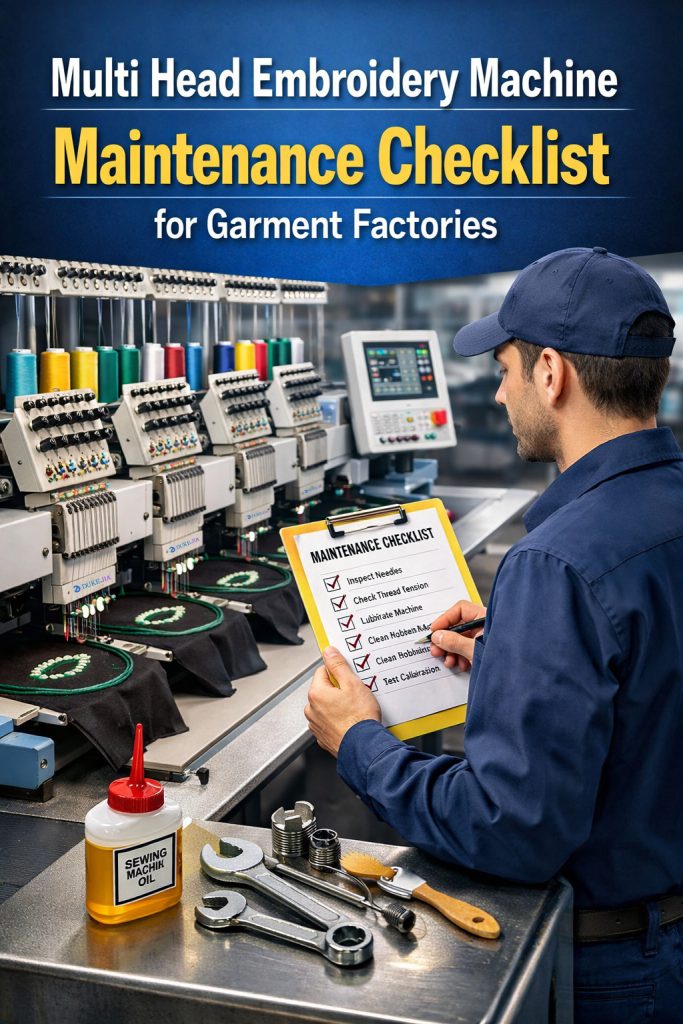
The modern garment factory thrives on efficiency and value addition. In this competitive landscape, multi-head embroidery machines are indispensable assets, transforming basic textiles into high-value products through intricate designs, branding, and embellishments. The machine shown above is installed in a modern garment factory, tirelessly producing complex patterns that elevate garment aesthetics and market value. To ensure such vital equipment operates at peak performance and delivers consistent quality, a robust maintenance checklist for multi head embroidery machines is not just recommended, but absolutely critical for sustained profitability.
Regular maintenance for multi-head embroidery machines directly impacts everything from stitch quality and production speed to operator comfort and overall running costs. Neglecting these powerful machines can lead to costly downtime, inconsistent output, increased power consumption, and ultimately, a reduction in your factory’s ability to offer premium, value-added products and achieve better FOB (Free On Board) prices or margins. This guide provides a technical and practical overview for factory owners, production managers, industrial engineers, and maintenance teams.
Why Multi-Head Embroidery Machines are Crucial for Garment Factories
Industrial multi-head embroidery machines are workhorses for creating intricate designs on a wide range of products. They are widely used for:
- Apparel: T-shirts, polos, knitwear, jackets, denim, uniforms, corporate wear, sportswear (logos, emblems, intricate patterns).
- Home Textiles: Decorative cushions, bed linens, curtains, towels.
- Accessories: Caps, bags, badges, appliqué patches.
These machines solve several common shop floor problems by:
- Ensuring Consistent Quality: Eliminating the inconsistencies of manual embroidery, delivering precise and repeatable designs.
- Boosting Production Speed: Multiple heads working simultaneously drastically increase output, meeting tight deadlines.
- Reducing Labor Costs: Automation minimizes the need for skilled manual embroiderers for high-volume tasks.
- Supporting Value Addition: Enabling complex designs and branding that command higher selling prices and differentiate products in the market.
Modern machines also contribute to better operator comfort through intuitive interfaces and automated functions, and often feature energy-efficient motors, which positively impact power consumption and overall running cost.
Understanding Your Multi-Head Embroidery Machine: The Basics
At its core, a multi-head embroidery machine stitches designs onto fabric by precisely coordinating the movement of needles, thread, and the embroidery frame. Each head operates independently but in sync, allowing multiple garments or multiple sections of a single garment to be embroidered simultaneously.
Working Principle:
A design file (typically a .DST or .EXP format) loaded into the machine’s computer guides the process. The fabric, hooped taut, is moved by a pantograph system along X and Y axes. Simultaneously, each needle bar, loaded with a specific thread color, punches down to create a stitch. A rotary hook underneath catches the needle thread loop, intertwining it with the bobbin thread to form a lockstitch. Automatic thread trimmers cut threads between color changes or design elements, ensuring clean finishing.
Key Components and Their Role:
- Needle Bar Mechanism: Houses the needles and controls their vertical motion. Each head typically has multiple needle bars (e.g., 9, 12, 15) for quick color changes.
- Thread Tension Assembly: Consists of tension discs and springs to regulate the tightness of the needle thread, crucial for balanced stitches.
- Rotary Hook & Bobbin Case: Forms the bottom stitch by catching the needle thread loop and interlocking it with the bobbin thread.
- Pantograph/Frame Drive System: A precision mechanical system that moves the embroidery frame (with the hooped fabric) in X and Y directions, following the design path.
- Control Panel/Computer: The brain of the machine, storing designs, controlling machine functions, and providing operator interface.
- Automatic Thread Trimmer: An essential feature that automatically cuts both needle and bobbin threads when required, saving significant manual labor and improving efficiency.
- Hoops/Frames: Varying sizes of frames to hold the fabric taut during embroidery.
Typical Production Capacities:
Multi-head machines offer impressive speed. A single head can typically operate between 800 to 1200 stitches per minute (SPM), depending on the machine model, design complexity, and material. With multiple heads, total production capacity multiplies, making them highly efficient for mass production.
The Essential Maintenance Checklist for Multi Head Embroidery Machines
Regular preventive maintenance is paramount to extend machine lifespan, ensure consistent stitch quality, and minimize unexpected breakdowns.
Daily Checks & Maintenance (Every Shift):
- Cleaning the Thread Path: Use a soft brush or compressed air to clear lint and dust from tension discs, thread guides, and needle bars. Lint build-up causes thread breaks.
- Cleaning the Rotary Hook Area: Remove the bobbin case and needle plate. Clean out lint and debris from the rotary hook and surrounding areas. This is critical to prevent skipped stitches and thread breaks.
- Oiling the Rotary Hook: Apply 1-2 drops of high-quality embroidery machine oil into the rotary hook race.
- Needle Inspection: Check needles for sharpness, bends, burrs, or signs of heat. Replace any damaged needles immediately to prevent fabric damage and skipped stitches.
- Thread Path Inspection: Ensure thread runs smoothly through all guides, with no snags or excessive friction.
Weekly/Bi-Weekly Checks:
- Lubrication of Moving Parts: Apply oil to designated points on the needle bars, presser foot cams, and upper shaft bearings. Consult your machine manual for specific lubrication points.
- Pantograph Rail Cleaning & Lubrication: Clean lint and dust from the X and Y axis rails, then apply a thin layer of appropriate grease or oil. Smooth movement here is vital for precise embroidery.
- Belt Tension Check: Inspect drive belts (motor belts, timing belts) for wear and proper tension. Loose belts can affect timing and stitch consistency.
- Check for Loose Fasteners: Inspect screws and bolts on critical components (needle plates, presser feet, frame holders) and tighten if necessary.
- Hoop Condition: Inspect hoops for warping or damage; a deformed hoop affects fabric tension and embroidery quality.
Monthly/Quarterly Checks:
- Thorough Machine Cleaning: A deeper clean of the entire machine interior, including removing covers if necessary (follow safety guidelines).
- Thread Trimmer Alignment: Verify the alignment and sharpness of the automatic thread trimming knives. Misalignment leads to incomplete trims.
- Needle Bar Height Calibration: Check and adjust needle bar height as per manufacturer specifications. Incorrect height affects stitch formation and can cause needle breakage.
- Tension Spring Check: Inspect tension springs for wear or weakness.
- Electrical Connections: Visually inspect power cords and electrical connections for wear or damage.
- Software & Firmware Update: Check for and install any recommended software or firmware updates from the manufacturer.
- Professional Service: Schedule a preventive maintenance visit from certified service technicians (like those from Hari Chand Anand & Co.) for comprehensive checks, lubrication of inaccessible parts, and calibration.
Comparative Analysis: Choosing the Right Embroidery Machine
Understanding the nuances between different machine types can help garment factories make informed investment decisions.
| Feature | Chinese/Other Asian Machines (e.g., DukeJia) | Japanese/European Machines |
|---|---|---|
| Initial Cost | Generally lower, offering a competitive entry point. | Higher upfront investment. |
| Build Quality | Significantly improved in modern generations; good value for money. | Often regarded as industry benchmark for precision and durability. |
| Technology | Advanced features like large touchscreens, networking, good SPM. | Highly refined motion control, specialized features, long-term reliability. |
| Lifespan | Good with proper maintenance; modern machines are quite robust. | Excellent, often lasting decades with regular servicing. |
| Service & Spares | Localized support (e.g., HCA for DukeJia) is crucial for quick resolution. | Strong global service networks, but local representation matters. |
| Ideal For | Factories needing cost-effective, high-performing machines with good support. | Factories prioritizing ultimate precision, brand prestige, long-term ROI. |
Older Generation vs. Modern, Programmable Models:
- Automation: Modern machines feature automatic thread trimming, automatic color changes, large pattern memory, and networking capabilities for centralized management, significantly reducing manual intervention compared to older, semi-manual models.
- Efficiency: Higher SPM, more consistent stitch quality, reduced downtime due to advanced diagnostics, and better energy efficiency are hallmarks of modern machines.
- User Interface: Intuitive, large touchscreens on modern machines simplify operation and design management.
When Higher Automation is Justified:
Higher automation (multi-head, automatic trimming, pattern memory, networking) is justified when a factory:
- Deals with high production volumes and needs to maximize output.
- Handles complex designs with frequent color changes.
- Aims to reduce reliance on highly skilled operators and minimize human error.
- Requires superior, consistent quality across all products.
- Seeks to integrate production processes for better oversight and efficiency.
For smaller operations or very specific, simple tasks, basic models might suffice, but for garment factories looking for competitive edge and future scalability, automated multi-head machines are a superior investment.
Troubleshooting Common Embroidery Machine Faults
Even with diligent maintenance, issues can arise. Here’s a quick guide to common problems:
Thread Breakage:
- Likely Causes: Bent/blunt needle, incorrect thread tension, burrs on needle plate/hook, poor thread quality, incorrect timing, lint in thread path.
- Basic Solutions: Replace needle, adjust tension, clean hook area, use quality thread, verify timing (professional help if needed).
Skipped Stitches:
- Likely Causes: Needle inserted incorrectly, wrong needle type/size for fabric, loose hooping, incorrect timing, burrs on hook.
- Basic Solutions: Reinsert/replace needle correctly, use appropriate needle, re-hoop fabric tightly, clean hook.
Poor Stitch Quality (Loopy/Uneven):
- Likely Causes: Incorrect needle/bobbin thread tension balance, bobbin loaded incorrectly, fabric not hooped tightly, machine vibration.
- Basic Solutions: Adjust needle and bobbin tension, ensure bobbin is correctly wound/inserted, re-hoop fabric, check machine leveling.
Machine Not Starting/Error Codes:
- Likely Causes: Power supply issue, emergency stop engaged, sensor fault, software glitch.
- Basic Solutions: Check power, disengage emergency stop, restart machine. For persistent errors, note the code and contact service.
Choosing Your Value-Addition Partner: A Buying Guide
When investing in industrial embroidery machines, consider:
- Production Needs: What is your desired volume, complexity of designs, and material types?
- Automation Level: Does the machine offer features like automatic trimming, multiple heads, and user-friendly software to meet your efficiency goals?
- Build Quality and Technology: Look for robust construction and modern features that ensure longevity and performance. DukeJia machines, distributed by HCA, incorporate advanced technology for reliability and precision.
- Crucially, After-Sales Support: Evaluate the supplier’s commitment to installation, operator training, preventive maintenance schedules, availability of genuine spares, and responsive on-call service teams. This is where Hari Chand Anand & Co. (HCA) excels.
DukeJia & HCA: Your Partner in Value-Addition Machinery
DukeJia, represented in India by Hari Chand Anand & Co. (HCA), is a trusted value-addition machinery partner for garment factories. We supply and service industrial embroidery, perforation, and quilting systems across India, with strong presence in key manufacturing hubs like Delhi NCR, Tirupur, Ludhiana, Chennai, and Bengaluru. Our range includes high-performance multi-head embroidery machines perfect for intricate logos, placement embroidery, appliqué, and more. Beyond embroidery, we also offer advanced perforation/laser machines for sportswear and design details, and quilting machines for jackets, home textiles, and padded products.
Our commitment extends far beyond the sale, encompassing comprehensive after-sales support. This includes professional installation, in-depth operator training, tailored preventive maintenance plans, readily available genuine spare parts, and dedicated on-call service teams to ensure your DukeJia machines operate flawlessly, maximizing your factory’s productivity and profitability.
Frequently Asked Questions
What types of products can multi-head embroidery machines be used for?
Multi-head embroidery machines are versatile and used for a wide range of products including apparel (T-shirts, polos, jackets, uniforms), home textiles (cushions, bed linens), and accessories (caps, bags, badges, patches).
How often should I perform maintenance on my embroidery machine?
Maintenance should be performed daily (cleaning thread path, hook area, oiling hook, needle inspection), weekly/bi-weekly (lubrication, belt tension, hoop inspection), and monthly/quarterly (thorough cleaning, trimmer alignment, professional service). Consult your machine manual for specific guidelines.
What are the benefits of choosing a modern, automated multi-head embroidery machine?
Modern automated machines offer higher SPM, superior and consistent stitch quality, automatic thread trimming and color changes, larger pattern memory, intuitive touchscreens, networking capabilities, and better energy efficiency, leading to increased productivity and reduced labor.
What are common causes of thread breakage and how can I fix them?
Common causes include a bent/blunt needle, incorrect thread tension, burrs on the needle plate or hook, poor thread quality, incorrect machine timing, or lint build-up in the thread path. Solutions often involve replacing the needle, adjusting tension, cleaning the hook area, and using quality thread.
Why is after-sales support important when buying an industrial embroidery machine?
After-sales support is crucial for ensuring smooth operation and maximizing your investment. It includes professional installation, operator training, preventive maintenance, availability of genuine spare parts, and responsive on-call service teams, all of which minimize downtime and extend machine lifespan.
Does DukeJia / HCA provide machines other than embroidery?
Yes, Hari Chand Anand & Co. (HCA), the representative for DukeJia in India, also supplies and services advanced perforation/laser machines for sportswear and design details, and quilting machines for jackets, home textiles, and padded products, in addition to high-performance multi-head embroidery machines.
For DukeJia embroidery, perforation or quilting machine demonstrations, pricing or technical consultation, contact Hari Chand Anand & Co. (HCA), New Delhi.