
Published on: 16 Feb 2026
Power Saving Tips for Embroidery and Quilting Machines in India
Key takeaways for garment factories:
- Modern Technology is Key: Servo motors, direct drive systems, and intelligent standby modes significantly cut power consumption.
- Optimize Production: Batch jobs, minimize idle time, and use efficient scheduling to keep machines running smoothly.
- Maintenance Matters: Regular lubrication, cleaning, and checks reduce friction and strain on motors, saving energy.
- Operator Training: Well-trained operators use machines more efficiently, reducing errors and re-runs.
- Smart Investment: Choose machines with proven energy efficiency, durable build, and strong after-sales support like those from DukeJia (HCA).
Table of Contents
- Power Saving Tips for Embroidery and Quilting Machines in India
- Technical Aspects of Energy Consumption in Value-Addition Machines
- Machine Comparison: Investing in Energy Efficiency
- Troubleshooting Common Power-Related Issues & Maintenance
- Selecting the Right Machine for Sustainable Operations
- Key Takeaways
- Frequently Asked Questions
In the dynamic and competitive landscape of India’s garment manufacturing sector, every operational cost impacts the bottom line. Among the most significant recurring expenses for factories utilizing value-addition machinery like industrial embroidery and quilting systems is electricity. As energy prices continue to fluctuate and often rise, optimizing power consumption is no longer an option but a strategic imperative. This post outlines practical and technical power saving tips for embroidery and quilting machines in India, offering valuable insights for factory owners, production managers, industrial engineers, and maintenance teams.
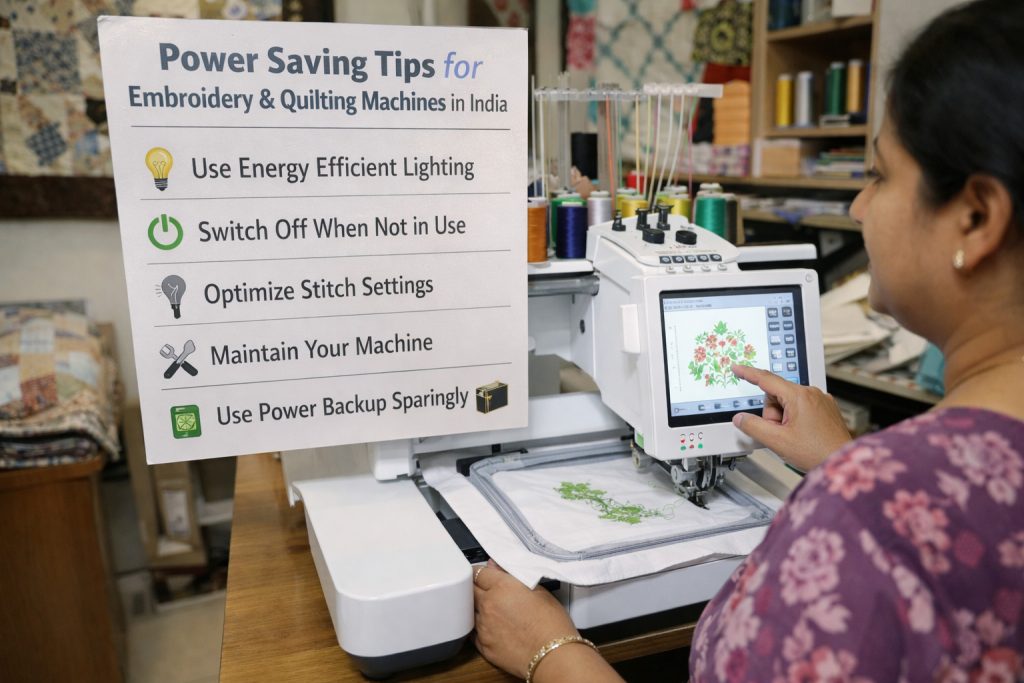
The setup in the image illustrates how a modern industrial machine integrates into a value-addition production line, highlighting the sophisticated technology at play. These advanced machines, essential for creating intricate designs and textures on various textiles, from T-shirts and polos to jackets, home textiles, uniforms, and sportswear, are also significant energy consumers. By implementing targeted strategies, factories can reduce their electricity bills, enhance operational efficiency, and contribute to more sustainable manufacturing practices.
Power Saving Tips for Embroidery and Quilting Machines in India
Efficient power management for industrial embroidery and quilting machines involves a multi-faceted approach, combining smart technology choices, optimized production planning, rigorous maintenance, and operator training.
1. Machine Selection and Technology Upgrades
The foundational step to energy saving begins with the machinery itself.
- Servo Motors vs. Stepper Motors: Modern industrial machines, including those supplied by DukeJia (represented by HCA), increasingly feature servo motors instead of traditional stepper motors. Servo motors are significantly more energy-efficient as they consume power only when movement is required and adjust power output precisely to the load, leading to substantial energy savings, especially during idle times and variable speed operations.
- Direct Drive Systems: Machines with direct drive motors eliminate belts and gears, reducing mechanical losses and friction, which translates into lower power consumption and less wear and tear.
- LED Lighting: Replacing conventional fluorescent or incandescent work area lighting with energy-efficient LED lights can provide significant savings over time.
- Standby Modes: Modern computer-controlled machines often have intelligent standby modes that reduce power consumption when the machine is paused or idle for extended periods.
2. Optimizing Production Processes and Planning
Strategic planning can drastically cut down on energy waste.
- Batching Similar Jobs: Grouping orders with similar design parameters or thread colors reduces machine setup times, thread changes, and restarts, thus minimizing idle power consumption and frequent motor stops/starts.
- Efficient Layouts: An optimized factory layout reduces material handling distances and waiting times, keeping machines running consistently rather than in stop-start cycles.
- Reduced Idle Time: Encourage operators to minimize machine idle time between jobs. Powering down or utilizing standby modes during longer breaks can save energy.
- Smart Scheduling: Plan production to maximize machine utilization during peak operating hours and avoid unnecessary powering up for small, isolated tasks.
3. Preventive Maintenance and Daily Care
A well-maintained machine runs more efficiently, directly impacting its power consumption.
- Lubrication: Regular and correct lubrication of moving parts (e.g., pantograph, needle bar mechanisms, rotary hooks for embroidery; needle bar drive, presser foot lift for quilting) reduces friction. Less friction means motors work less intensely and consume less power.
- Cleaning: Accumulation of lint, dust, and thread fragments in critical areas (e.g., under the needle plate, in the bobbin area, inside the machine head, air filters) can hinder smooth operation, causing motors to overcompensate. Regular cleaning is crucial.
- Needle and Thread Path: Dull needles or a rough thread path (e.g., worn tension discs, eyelets) increase resistance, making the machine work harder and leading to thread breaks, which then require restarts and consume more power. Regular inspection and replacement are vital.
- Belt Tension: For machines with belts (e.g., some older models, or specific sub-systems), ensuring correct tension prevents slippage (wasted energy) or excessive tightness (increased load on motor).
- Calibration: Proper calibration of stitch parameters, tension, and alignment ensures that the machine operates smoothly and efficiently without unnecessary strain.
4. Operator Training and Best Practices
Well-trained operators are key to efficient machine usage.
- Proper Machine Setup: Correct hooping, frame loading, and bobbin winding reduce errors and re-runs, saving both time and energy.
- Minimizing Thread Breaks: Operators trained to identify and prevent common causes of thread breaks (e.g., correct tension, suitable needles, quality threads) contribute to continuous, energy-efficient operation.
- Using Standby Features: Training operators to utilize energy-saving standby or sleep modes during breaks or between batches.
5. Factory Infrastructure and Environment
The surrounding environment also plays a role in energy consumption.
- Stable Power Supply: Unstable voltage can cause motors to draw more current or lead to inefficiencies. Investing in voltage stabilizers or ensuring a stable power grid connection is crucial.
- Optimal Temperature and Humidity: While not directly machine power, maintaining appropriate factory temperature and humidity can reduce strain on other HVAC systems, which are major energy consumers.
- Power Factor Correction: Industrial facilities with many motors can benefit from power factor correction units to reduce reactive power, leading to lower utility bills.
6. Software and Pattern Optimization
The digital aspect of these machines offers energy-saving opportunities.
- Efficient Digitization: Well-digitized embroidery patterns with optimized stitch paths, fewer trims, and efficient color changes can reduce machine runtime and unnecessary movements.
- Quilting Pattern Design: For quilting, efficient pattern nesting and continuous path designs minimize repositioning and thread cuts, leading to faster, more energy-efficient runs.
Technical Aspects of Energy Consumption in Value-Addition Machines
Industrial embroidery and quilting machines consume power primarily through their various motors and electronic control systems.
- Main Drive Motor: Powers the pantograph (X-Y movement of the embroidery frame or quilting table) and the needle bar drive mechanism for stitch formation. In modern machines, this is often a servo motor for precise control and efficiency.
- Head Motors (Embroidery): Each embroidery head might have its own dedicated motor for color changes or specific functions, though often a centralized mechanism drives all heads.
- Rotary Hook/Shuttle (Embroidery): The mechanism forming the lockstitch beneath the fabric is motor-driven.
- Needle Bar Motors (Quilting): Multi-needle quilting machines have several needle bars, each requiring precise control.
- Auxiliary Motors: Motors for automatic thread trimming, presser foot lift, bobbin winding, and other automation features.
- Control Systems: The central computer, LCD screens, and electronic components consume power for processing, data storage, and user interface.
Stitch Formation and Motion:
- Embroidery: The pantograph moves the fabric frame while needle bars move up and down, and the rotary hook forms the lockstitch. Precise coordination of these movements at speeds typically ranging from 800 to 1200 stitches per minute (SPM) on modern multi-head machines demands significant energy.
- Quilting: Multi-needle bar machines move the fabric and battings across a sewing bed, with needle bars synchronously forming stitches in a continuous pattern. Speeds can range from 500 to 800 SPM, depending on the pattern complexity and machine type.
By understanding these components, it becomes clear how reduced friction, optimized movement, and efficient motor technologies directly translate into power savings.
Machine Comparison: Investing in Energy Efficiency
When considering new or upgraded machinery, the choice significantly impacts long-term energy consumption and operational costs.
| Feature | Older Generation Machines | Modern Computer-Controlled Machines (e.g., DukeJia) |
|---|---|---|
| Motor Type | Predominantly stepper motors, AC induction motors | Advanced servo motors, direct drive systems |
| Energy Efficiency | Lower efficiency, higher power consumption (especially idle) | High efficiency, lower power consumption (up to 30-50% less) |
| Control System | Electro-mechanical, limited memory, manual adjustments | Fully computerized, large pattern memory, precise digital control |
| Speed & Precision | Lower speeds, less precise stitch formation, more vibration | Higher speeds (e.g., 1000-1200 SPM embroidery), superior stitch quality |
| Noise & Vibration | Higher | Significantly lower |
| Automation | Basic (manual thread trimming, color change) | High (auto thread trimming, auto color change, sequin/cording attachment) |
| Maintenance Needs | Often higher due to mechanical wear | Reduced mechanical wear, but requires software/electronic expertise |
| Cost | Lower initial investment | Higher initial investment, but lower running costs and higher productivity |
Japanese/European vs. Chinese/Other Asian Machines:
While Japanese/European machines are renowned for their build quality, longevity, and often superior energy efficiency features (like advanced servo systems), Chinese and other Asian machines offer a more competitive price point. However, modern Chinese manufacturers like DukeJia have significantly closed the gap in technology and build quality, offering robust machines with advanced features like servo motors and direct drive systems that rival their counterparts in energy efficiency and performance, making them a compelling choice for Indian factories.
Higher Automation Justification:
Multi-head embroidery machines, automatic trimming, vast pattern memory, and specialized attachments (sequin, cording) are justified when there is a consistent demand for high-volume production, complex designs, and a need to reduce labor costs and human error. For smaller operations or very specific, low-volume niche products, basic, reliable single-head machines might suffice initially, though modern basic models still offer significant energy efficiency benefits over their older predecessors.
Troubleshooting Common Power-Related Issues & Maintenance
Fault: Motor Overheating
- Likely Causes: Excessive load due to friction (lack of lubrication, jammed parts), unstable voltage, motor nearing end-of-life, dust/lint accumulation blocking cooling.
- Basic Solution: Check for mechanical obstructions, ensure proper lubrication, clean cooling vents, verify stable power supply, consider motor inspection/replacement.
Fault: Inconsistent Power Draw / Surges
- Likely Causes: Loose electrical connections, faulty wiring, fluctuating power supply from the grid, worn-out motor brushes (if applicable), faulty control board.
- Basic Solution: Inspect wiring and connections, use a voltage stabilizer, consult an electrician or HCA service technician.
Fault: Unexpected Shutdowns / Tripping Breakers
- Likely Causes: Overcurrent due to motor overload, short circuit, faulty internal components, insufficient circuit breaker capacity.
- Basic Solution: Reduce mechanical load, check for shorts, consult HCA’s service team for diagnostics.
Regular preventive maintenance, as advocated by DukeJia (HCA), is the best defense against such issues, ensuring machines run optimally and consume power efficiently.
Selecting the Right Machine for Sustainable Operations
A buying guide checklist for decision-makers:
- Energy Consumption Data: Request and compare energy consumption specifications (kW/h) under typical operating conditions. Look for machines with energy-saving certifications.
- Motor Technology: Prioritize machines equipped with servo motors and direct drive systems for superior energy efficiency.
- Build Quality and Durability: Invest in machines known for robust construction, which ensures longevity and consistent performance, indirectly leading to better energy usage over time. DukeJia machines are designed for industrial durability.
- After-Sales Support: Evaluate the supplier’s commitment to after-sales service, including preventive maintenance plans, genuine spares, and technician availability. HCA offers comprehensive support across India (Delhi NCR, Tirupur, Ludhiana, Chennai, Bengaluru).
- Automation Features: Consider features like automatic thread trimming, color change, and large pattern memory, which reduce operator intervention and improve workflow efficiency, saving time and indirect energy.
- Software and Control System: Opt for user-friendly, intelligent control systems that offer optimization features for stitch paths and machine parameters.
- Spares Availability: Ensure easy access to genuine spare parts to minimize downtime and avoid using non-standard parts that might compromise efficiency.
Investing in modern, energy-efficient embroidery and quilting machines from DukeJia not only supports value-addition through superior quality and speed, but also significantly reduces running costs, enhances operator comfort, and helps secure a better FOB or margin for your products. DukeJia, through Hari Chand Anand & Co. (HCA), supplies and services industrial embroidery, perforation, and quilting systems, offering complete solutions for logo and placement embroidery, all-over quilting, sportswear perforation, appliqué, and home textile quilting. Their comprehensive after-sales support includes installation, training, preventive maintenance, genuine spares, and dedicated on-call service teams across India.
Key Takeaways
- Modern Technology is Key: Servo motors, direct drive systems, and intelligent standby modes significantly cut power consumption.
- Optimize Production: Batch jobs, minimize idle time, and use efficient scheduling to keep machines running smoothly.
- Maintenance Matters: Regular lubrication, cleaning, and checks reduce friction and strain on motors, saving energy.
- Operator Training: Well-trained operators use machines more efficiently, reducing errors and re-runs.
- Infrastructure Support: Stable power supply and proper factory environment contribute to overall energy efficiency.
- Smart Investment: Choose machines with proven energy efficiency, durable build, and strong after-sales support like those from DukeJia (HCA).
Frequently Asked Questions
How much energy can I save by upgrading to modern DukeJia machines with servo motors?
Modern DukeJia machines with servo motors can reduce power consumption by 30-50% compared to older models, especially during idle times and variable speed operations, leading to significant cost savings.
What is the role of preventive maintenance in power saving for my embroidery machine?
Regular preventive maintenance, including lubrication, cleaning, and checking for worn parts, reduces friction and strain on motors. This ensures the machine runs more efficiently, consuming less power and preventing costly breakdowns.
Are Chinese machines like DukeJia as energy-efficient as Japanese or European brands?
Modern Chinese manufacturers like DukeJia have significantly advanced in technology, offering robust machines with features like servo motors and direct drive systems that rival their Japanese/European counterparts in energy efficiency and performance, often at a more competitive price point.
How does operator training impact energy consumption?
Well-trained operators contribute significantly to energy efficiency by minimizing thread breaks, utilizing standby features during breaks, and performing correct machine setup, all of which reduce re-runs and unnecessary power usage.
Beyond machine upgrades, what factory-level changes can I implement for better power saving?
Ensuring a stable power supply (e.g., with voltage stabilizers), optimizing factory layout, maintaining appropriate temperature/humidity to reduce HVAC load, and considering power factor correction units for industrial facilities can all lead to substantial energy savings.
What features should I look for when buying a new machine for energy efficiency?
Prioritize machines with servo motors, direct drive systems, intelligent standby modes, and those with transparent energy consumption data. Also, consider robust build quality and strong after-sales support for long-term efficiency.
For DukeJia embroidery, perforation or quilting machine demonstrations, pricing or technical consultation, contact Hari Chand Anand & Co. (HCA), New Delhi.